1/1

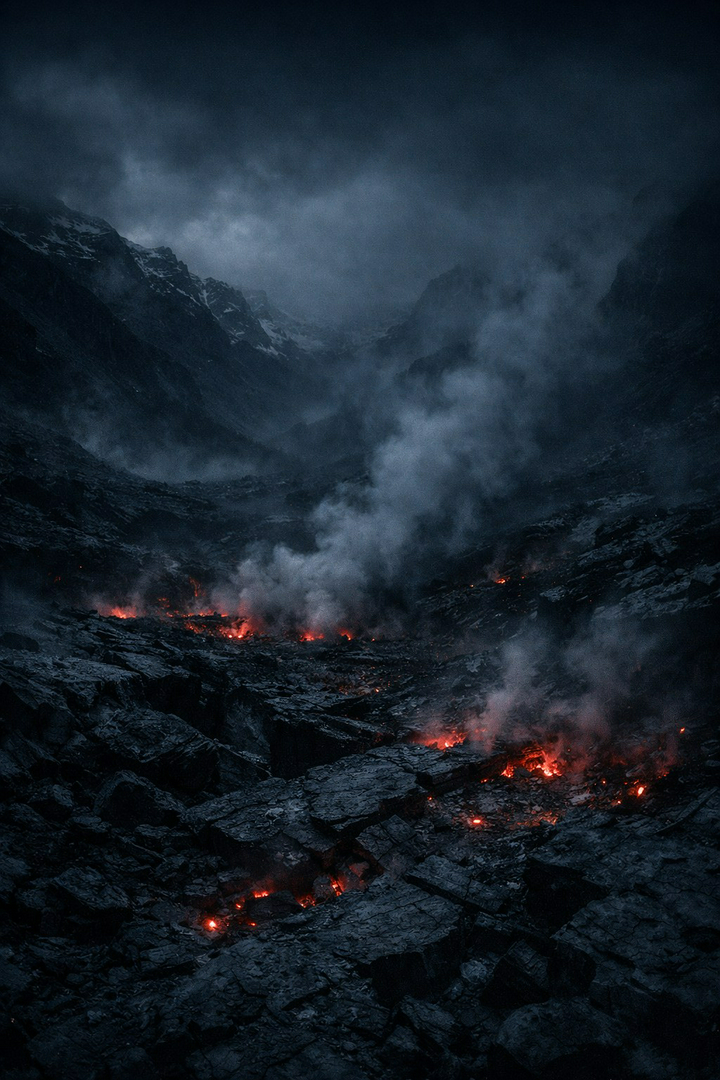
"Gehenna": Why Jesus' description of Hell was actually a real, physical place. 🔥🗑️
I was doing a deep dive into the word Jesus used for Hell: "Gehenna." It wasn't just a spiritual concept. Gehenna was an actual, literal valley outside Jerusalem. It was a cursed place where ancient Israelites used to sacrifice children in the fire to false gods. By Jesus' time, it had become a burning garbage dump where fires literally never went out, and maggots consumed the refuse. When Jesus talked about the "worm that does not die and the fire that is not quenched," His listeners knew EXACTLY what He meant. They could probably smell it from the city walls. Makes the reality of judgment so much more visceral. 😳 #BiblicalHistory #Gehenna #TheRealHell #ScriptureStudy
14 days ago

Paula Hollon
Gehenna sounds horrible!!!! I’m so grateful I’ve even washed in Jesus blood. He’s the most high King! Hosanna Hosanna Hallelujah, in Jesus wonderful loving name I pray Amen
12d
Perris, CA
Reply
7

Sheri Keithley
Resources Encyclopedia of The Bible G Gehenna
Gehenna
GEHENNA gĭ hĕn’ ə (γέεννα, G1147, lit., valley of Hinnom, Eng. VSS hell). In the NT the final place of punishment of the ungodly. The word derives from the Heb. גֵֽי־הִנֹּמ׃֙, the Valley of Hinnom, or more fully, the Valley of the son(s) of Hinnom, situated to the S or SW of Jerusalem, usually identified with the Wadi-er-Rababi. It is first referred to in Joshua 15:8 and 18:16 as marking the boundary between the inheritance of the tribes of Judah and Benjamin. (In recent times, until the Arab-Israeli war in June 1967, it was divided in two by the border between Israel and Jordan.) During the reigns of Ahaz and Manasseh, at Topheth (prob. lit. “fire-place”) in the Valley of Hinnom, human sacrifices were offered to the heathen god Molech (Moloch; 2 Chron 28:3; 33:6). Josiah in his reforms “defiled” Topheth and thus prevented any further use of the valley for that purpose (2 Kings 23:10). Jeremiah (7:30-33) announces that the name of the valley will be changed to the “Valley of Slaughter” because when the Lord judged Judah for her sins, the number of dead would be so great that they would be thrown into the valley to lie there without burial. In later times the valley seems to have been used for burning refuse, and also the bodies of criminals. From about the 2nd cent. b.c., the Valley of Hinnom came to be thought of as the place of final punishment for the enemies of God. This arose either from the earlier associations or f
12d
Lubbock, TX
Reply
4

jacqueline guthridge
Thank You for understanding in Jesus Mighty Name Amen 🙏🏾
12d
Burgaw, NC
Reply
7

Darnesha Nunn
Amen well if that’s not the truth in others opinion what I know is true is there is a heaven and Hell and that does makes perfect sense to me of a example of hell and being the God fearing woman I know deep down I want to go to heaven and love internal life with my God!!! So know the difference leaving and earth and going to a good place then going there amen
12d
St Louis, MO
Reply
1

Timothy
it's a reference to a "state of degradation" that's all that means, a reference to Gahanna was a place where they burned old animal sacrifice parts at, which was located..outside of Jerusalem, God doesn't torture souls people, he blots them out ..he gets rid of them, even any memory's..that we may have of um, 🕊️
12d
Houston, TX
Reply
1

Amy Sharkey
I went to Catholic school from first to 12th grade and we were taught to fear God and hell and we did. I still do
12d
Glendale, AZ
Reply(1)

Family Of 6
I agree. Good job
12d
Worcester, MA
Reply
2

Kimberly Yost
where in scripture is this referred to?
12d
Woodstock, IL
Reply(6)
1

carla davis
Amen
12d
Florissant, MO
Reply
2

Carl
Amen
12d
Owosso, MI
Reply
2
More comments ...
write a comment...